The Agency Chronicles
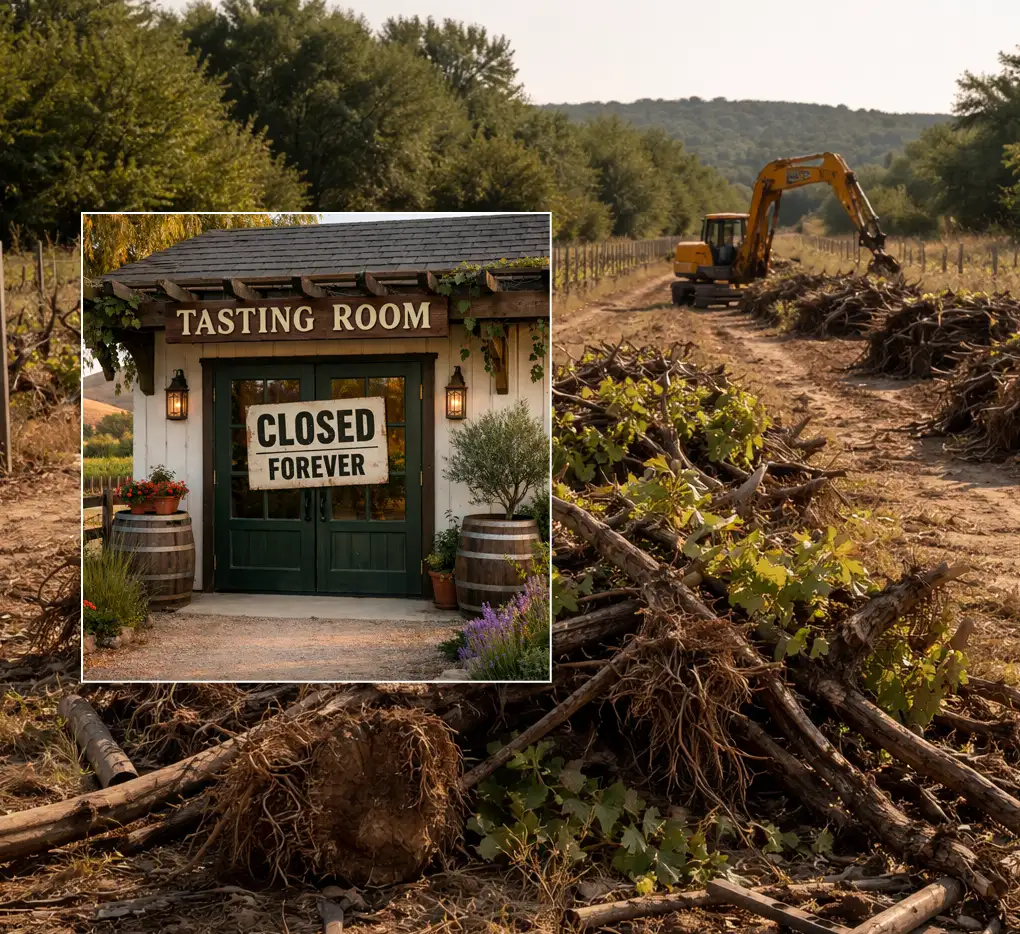
300 Wineries Closed in 2025. Growth in 2026 Will Belong to the Strategists
The Agency Chronicles
300 Wineries Closed in 2025. Growth in 2026 Will Belong to the Strategists
Over 300 wineries closed in 2025. That’s nearly one per day. Pause on that for a moment. This isn’t a blip. It’s not a bad quarter or a seasonal dip. It’s a clear signal that the wine industry is going through a real correction, and corrections don’t ask for permission. They just happen.
So, what’s behind it? Lower demand. Oversupply. A market that has shifted faster than many wineries were prepared for. And here’s the part that’s uncomfortable, but necessary to say out loud: The wineries that survive this moment won’t be the ones making the best wine. They’ll be the ones running the best business.
The Backbone of the Industry, and the Most at Risk
There’s a misconception that the wine industry is dominated by large, well-funded brands. Walk into any grocery store or national liquor chain and it certainly looks that way, rows of polished labels, global varietals, aggressive pricing.
But that’s not where the real story is.
Small wineries, those producing under 5,000 cases annually, are driving nearly all of the industry’s growth. Meanwhile, the number of large wineries producing over 500,000 cases has remained largely stagnant.
Even more telling: over 50% of all U.S. wineries produce fewer than 1,000 cases per year.
These are the passion projects. The family-run operations. The winemakers who are out in the vineyard at sunrise and still answering emails at midnight. They are the heart of the industry. And they are also the most vulnerable. Not because the wine isn’t exceptional. In many cases, it’s better than what’s sitting on retail shelves. But because making great wine and building a sustainable business are two entirely different disciplines.
The Illusion of Distribution, and the Reality of DtC
Traditionally, wineries relied on distribution to move product. But in today’s environment, that path is crowded, competitive, and often stacked against smaller producers. So many wineries have turned to Direct-to-Consumer (DtC) as their primary lifeline.
- Tasting rooms.
- Wine clubs.
- Online sales.
On paper, it’s a perfect solution. Sell directly, keep margins higher, build relationships with customers. And when it works, it works well.
But DtC is not automatic.
- It doesn’t solve the problem of visibility.
- It doesn’t guarantee traffic.
- And it certainly doesn’t ensure loyalty.
You can build a beautiful tasting room, design a compelling label, and produce an incredible wine, but if people don’t walk through the door, none of it matters. And right now, that’s exactly where many wineries are struggling.
The Traffic Problem No One Wants to Talk About
Let’s be honest: getting people into a tasting room is harder than it used to be. Consumer behavior is changing. Younger generations are drinking less wine. Experiences are competing with a hundred other options for attention. At the same time, the supply side hasn’t slowed down fast enough. The result? A buildup of inventory and fewer buyers to absorb it.
In 2025 alone, over 40,000 acres of vineyards were removed in California. That’s not a small adjustment, that’s a major correction.
And yet, even with less production, the challenge remains:
How do you consistently bring people in? Because without traffic, there is no DtC. And without DtC, small wineries don’t survive.
The Wineries That Will Win in 2026
So what separates the wineries that make it from the ones that don’t?
It’s not terroir.
It’s not varietal.
It’s not even price point.
It’s strategy.
The wineries that grow in 2026 will approach their business differently. They won’t rely on hope, habit, or “the way it’s always been done.” They’ll operate with intention.
And it comes down to three core areas.
1. Getting People to the Tasting Room
This is where everything starts.
Traffic is no longer passive. You can’t rely on drive-bys, tourism alone, or word-of-mouth to sustain your business.
You have to earn attention. That means connecting more deeply with your audience, not just talking about the wine, but telling a story people actually care about. Why this vineyard? Why this wine? Why now?
It means building a brand that stands out in a crowded market. Not louder, clearer. More defined. More memorable.
And it means giving people a reason to visit beyond just a tasting. Experience matters. Atmosphere matters. Emotional connection matters.
Because at the end of the day, people don’t just buy wine.
They buy how it makes them feel.
2. Customer Retention
Getting someone to visit once is an accomplishment. Getting them to come back is a business.
Too many wineries focus entirely on acquisition and overlook what happens after the first pour. But the most valuable customer isn’t the one who discovers you, it’s the one who stays with you.
Retention is where profitability lives.
- It’s about turning visitors into loyal customers.
- Turning customers into wine club members.
- And turning wine club members into advocates.
That requires more than a sign-up sheet.
It requires intentional communication, thoughtful experiences, and a sense that being part of your winery actually means something.
Because loyalty isn’t built on discounts. It’s built on connection.
3. A Solid Growth Strategy
This is where many wineries fall short, not because they don’t care, but because they’ve never been taught how to think about growth this way.
A real strategy means moving from reactive to proactive.
- Understanding your numbers.
- Creating predictable revenue streams.
- Knowing where your next sale is coming from, and the one after that.
It also means adapting faster than the market changes.
The industry isn’t standing still. Consumer preferences are evolving. Channels are shifting. Expectations are rising.
The wineries that succeed won’t be the ones trying to keep up.
They’ll be the ones anticipating what’s next.
A Reset, Not an Ending
It’s easy to look at the numbers, 300 closures, tens of thousands of acres removed, and see only contraction.
But this is also a reset.
- An opportunity for wineries that are willing to think differently.
- To operate differently.
- To treat their business with the same care and precision they bring to their wine.
Because here’s the reality:
Wine is not just a product.
It’s an experience.
It’s a relationship.
It’s hospitality.
And the wineries that embrace that, fully, are the ones that will still be here, growing, in 2026 and beyond.
Where We Come In
We don’t believe in one-size-fits-all solutions. And we can’t help everyone.
But for micro and small wineries, up to 15,000 cases per year, who are serious about building something sustainable, something profitable, something lasting…
We’re here. We’ve been helping businesses grow since 1997. We understand branding. We understand customer behavior. And we understand hospitality. Most importantly, we understand that great wine deserves a great business behind it.
And yes, we love wine.
Looking Ahead
The market will continue to shift. That’s a given.
More wineries will close. More vineyards may be pulled. More brands will change hands.
But not all.
Some will grow.
Some will thrive.
Some will redefine what success looks like in this new environment.
Those will be the strategists.
If there’s interest in having a real conversation about what that looks like, we’re always open to it.
(714) 203-6449
Because better decisions lead to better outcomes.
And in this industry, maybe it’s time for fewer poor decisions… and a few more pour decisions.
Related
.svg?alt=media&token=7c22eaee-2165-4151-9596-9b5cdb45ec06)
Los Angeles / Orange County Headquarter
©2026 WollnerStudios, inc. All Rights Reserved.